Is Accelerated TMS covered by insurance in San Ramon?
Standard TMS — one treatment a day, five a week, thirty-six treatments over six to eight weeks — is covered by most California plans.
Accelerated TMS is currently not covered by insurance. We offer financing up to 5 years, or 12 months with zero interest.
Why does your accelerated TMS cost so much less than other clinics?
Our complete course is $14,995 — 50 accelerated qpTMS™ treatments plus functional qEEG brain imaging and cognitive testing, before and after. Published cost guides place branded SAINT™ protocols at $30,000 to $36,000, with fMRI often billed separately. You are not receiving less treatment for the difference. You are simply not paying for a name.
A trademark protects a name, not a method. Accelerated TMS — multiple short sessions a day across five days, targeted from each patient’s own brain imaging — is published science that any qualified clinic may perform. What is owned is the brand applied to it. A clinic that licenses that brand pays a substantial fee for the right to use the word, and that fee is passed to the patient. It is the same reason a brand-name pill costs several times its chemically identical generic.
We license no branded protocol, so there is no royalty in your bill. We target treatment with qEEG brain mapping performed in our own offices rather than fMRI purchased from an outside imaging center, and we run the cognitive testing ourselves — which is why both are included rather than added.
Consider the arithmetic. Insurers reimburse standard TMS at roughly $250 to $450 per session. A 50-treatment course priced above $30,000 charges considerably more per treatment than the insured rate for the same underlying technology — to patients paying out of pocket, at the point in their lives when they are least able to shop around.
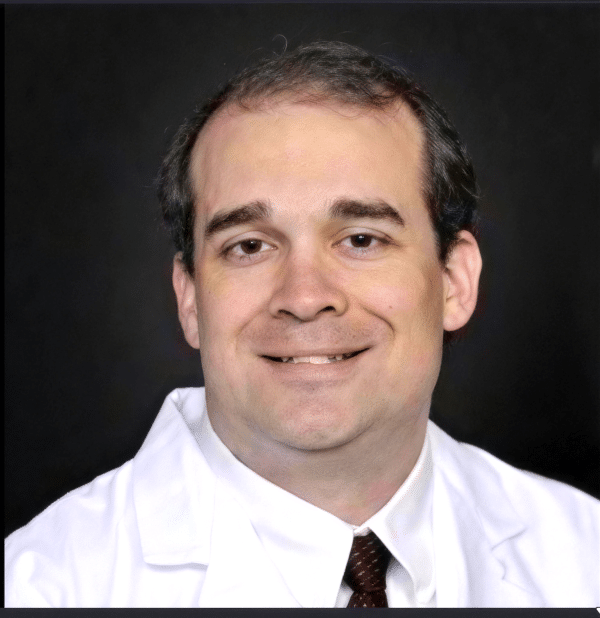
Our clinical director trained in TMS at Harvard Medical School in 2003 and has personalized TMS with qEEG brain mapping since 2012. We have never believed that recovery should be priced according to how badly someone needs it.
How much does TMS therapy cost in San Ramon?
Nationally, TMS runs $200–$400 per session without insurance, and cost is best judged as a full course rather than per session — typically 36 treatments, occasionally up to 50, depending on the condition treated. Our all-inclusive Accelerated qpTMS™ program is $14,995, or about $500 a month with financing, and covers 50 treatments plus all testing. It is worth seeing what that number is made of. Functional qEEG brain imaging together with cognitive assessment costs $3,500 — and we perform the full set twice: once before treatment to target your protocol, and again after you finish, so outcomes are validated scientifically against measured change rather than impression. That is $7,000 of the total in testing and retesting. The remaining $8,000 covers 50 treatments, which works out to under $200 per treatment. Pricing across providers varies with clinician qualifications, experience, and years in practice.
Do you accept insurance at your San Ramon clinic?
Yes. Brain Wellness Center is in network with almost all commercial insurance plans operating in California. Coverage is not automatic, though — each plan sets its own qualifying conditions, and it is standard TMS that plans cover. Accelerated qpTMS™ is not currently covered by any plan. Most plans require a diagnosis of major depression, a minimum age (usually 18, sometimes 15), and documented trials of two or more antidepressants. Your free video consult includes a benefits check, so you know exactly where you stand before committing to anything.
Is qEEG brain mapping covered by insurance?
When you are treated at our facility, brain mapping and cognitive evaluation are bundled into your treatment package rather than billed separately. If you would like to pursue reimbursement, we provide itemized receipts suitable for submission to your plan. Some patients report being reimbursed approximately $450 for brain mapping. We also perform qEEG brain imaging and cognitive assessments for patients referred by other physicians.
Will I have to stop my current medications?
No. You do not need to stop any medication you are currently on. You can start treatment immediately — as early as tomorrow.
Is this the same as the SAINT™ protocol?
While patients often ask about Stanford TMS or the S.A.I.N.T protocol, our clinic utilizes Accelerated qpTMS™, a proprietary, science-backed, drug-free treatment in practical use since 2012.
Do I need someone to drive me to and from treatment?
No. There is no sedation or anesthesia — patients are fully awake and alert. You can drive yourself and resume all normal activities immediately.
What does the treatment feel like?
Most patients describe a gentle hummingbird tapping on the top of the head. It is not painful. The most common side effect is a mild headache in about 5 of every 100 patients, lasting two to four hours and rarely recurring after the first few sessions.**
Am I a candidate in San Ramon if multiple medications have failed?
You are likely an ideal candidate. Accelerated qpTMS™ was designed for treatment-resistant depression — patients who have tried multiple antidepressants without lasting relief. Even patients who have not succeeded with ECT have found relief with TMS.
The Basics
What is Accelerated TMS, and is it available in San Ramon?
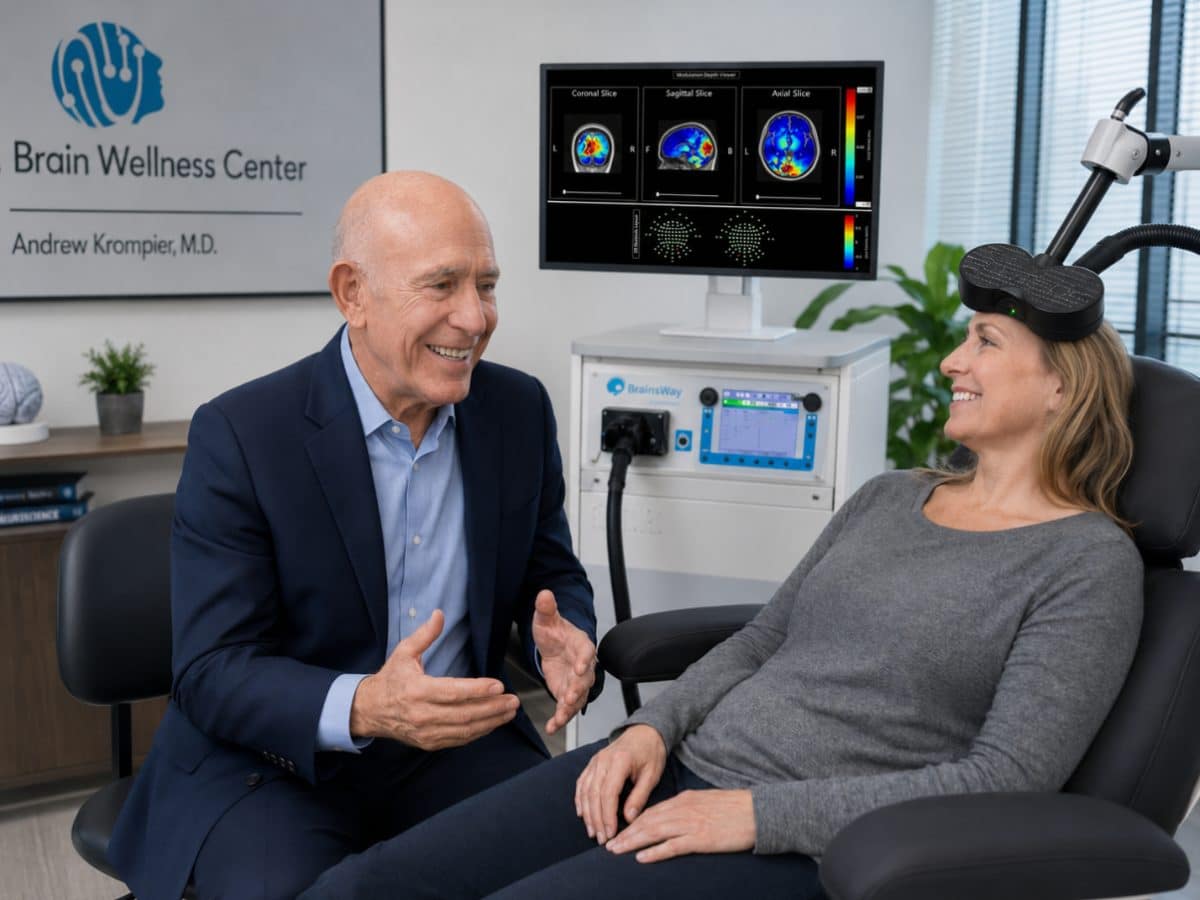
Accelerated Transcranial Magnetic Stimulation (Accelerated TMS) is an advanced form of TMS therapy, delivered using FDA-cleared devices, that provides multiple treatment sessions each day over five consecutive days instead of one session per day over six to eight weeks. The goal is to achieve the same therapeutic effect in a much shorter period while maintaining a favorable safety profile.
How is Accelerated TMS different from standard TMS?
Standard TMS usually consists of one treatment per day, five days a week, for approximately 36 sessions over six to eight weeks. Accelerated TMS delivers multiple carefully spaced sessions each day, allowing the full course of treatment to be completed in only five days.
Does Accelerated TMS really work in only five days?
Many patients begin noticing improvement during treatment week or within the first several weeks afterward. Individual response varies, but published accelerated TMS studies have demonstrated rapid improvement in many patients with treatment-resistant depression.
What is the success rate?
Published accelerated TMS studies, including the Stanford protocol, reported approximately 93% response and 79% remission. Brain Wellness Center has observed similar clinical outcomes in appropriately selected patients receiving personalized Accelerated qpTMS™.
How does Accelerated TMS work?
Magnetic pulses stimulate specific brain networks involved in mood regulation. Repeated stimulation promotes neuroplasticity — the brain’s natural ability to strengthen healthier communication pathways.
What happens during the five-day treatment?
Patients receive multiple treatment sessions each day separated by approximately 50-minute rest periods. Most patients spend the day comfortably in the clinic and return home each evening.
How many treatments do I receive each day?
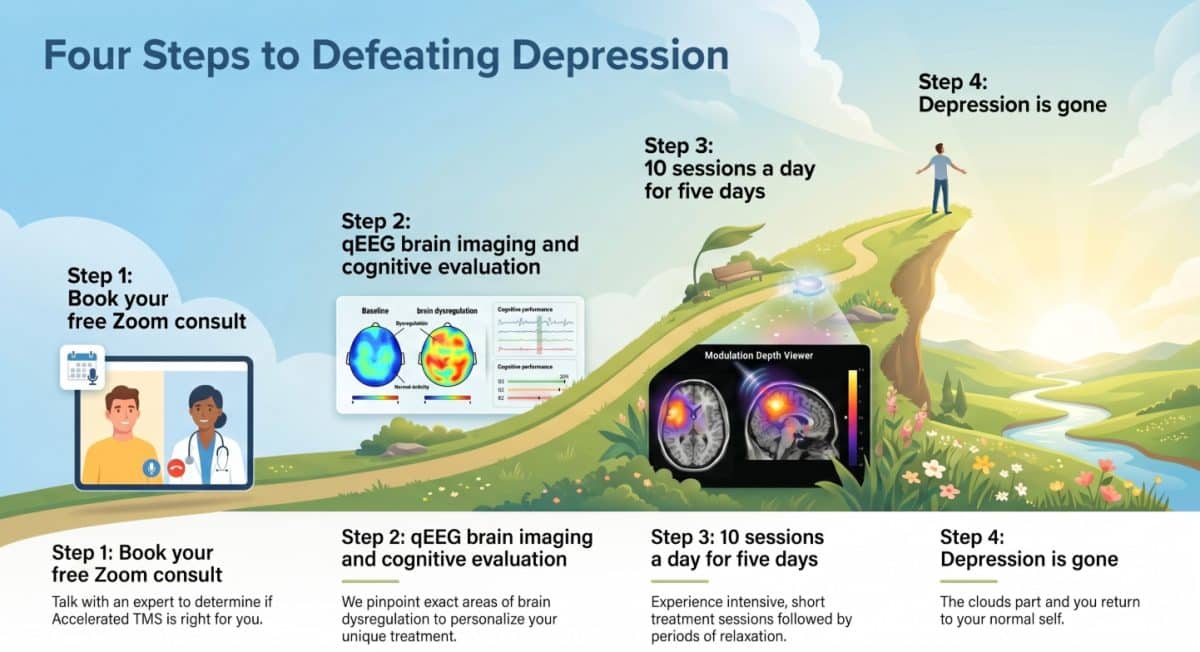
Most accelerated protocols deliver ten treatment sessions per day over five consecutive days, for approximately fifty treatment sessions.
How long is each appointment?
Treatment sessions generally last about 10 minutes. Including rest periods, patients typically spend most of the day at the clinic.
Comfort & Safety
Are there side effects?
The most common side effect is a mild temporary headache or scalp discomfort. Unlike medications, TMS does not produce systemic side effects such as weight gain, sexual dysfunction, nausea, or fatigue.
Is Accelerated TMS safe?
Yes. TMS has been studied extensively for more than three decades and is considered one of the safest non-invasive treatments available for depression.
What is the seizure risk?
Seizures are extremely rare. Published data estimate the risk at approximately one seizure per 70,000 treatment sessions when appropriate screening and safety guidelines are followed. None has been experienced at our facilities.
Results
What if I have anxiety in addition to depression?
Many patients experience improvement in both depression and anxiety because the brain networks involved often overlap.
What if I also have OCD?
TMS is FDA-cleared for OCD using specialized treatment protocols. During your evaluation, we determine the most appropriate treatment approach based on your symptoms.
How quickly will I notice improvement?
Some patients improve during treatment week, while others notice gradual improvement over several weeks as neuroplastic changes continue.
Is it normal to feel worse before feeling better?
Occasionally. Some patients experience temporary fluctuations in mood, energy, or sleep early in treatment. These changes are usually temporary and do not predict the final outcome.
How long do the results last?
Many patients remain well for months or years. Long-term durability depends on the individual and the underlying condition.
Will I need maintenance treatments?
Some patients never require additional treatment. Others benefit from occasional maintenance sessions if symptoms recur.
What happens if my depression returns?
A short series of booster treatments often restores improvement much more quickly than starting over.
What if standard TMS did not work?
Not everyone who fails conventional TMS will fail Accelerated TMS. Differences in targeting, stimulation parameters, and treatment intensity may improve outcomes for some patients.
The Brain Wellness Center Approach
Why does Stanford use functional MRI?
Stanford developed the SAINT™ protocol using functional MRI to identify individualized treatment targets based on brain network connectivity.
Do I need an fMRI?
Not necessarily. While functional MRI is one method of identifying treatment targets, other validated brain-mapping approaches may also be appropriate.
Is Functional qEEG Brain Mapping an alternative to fMRI?
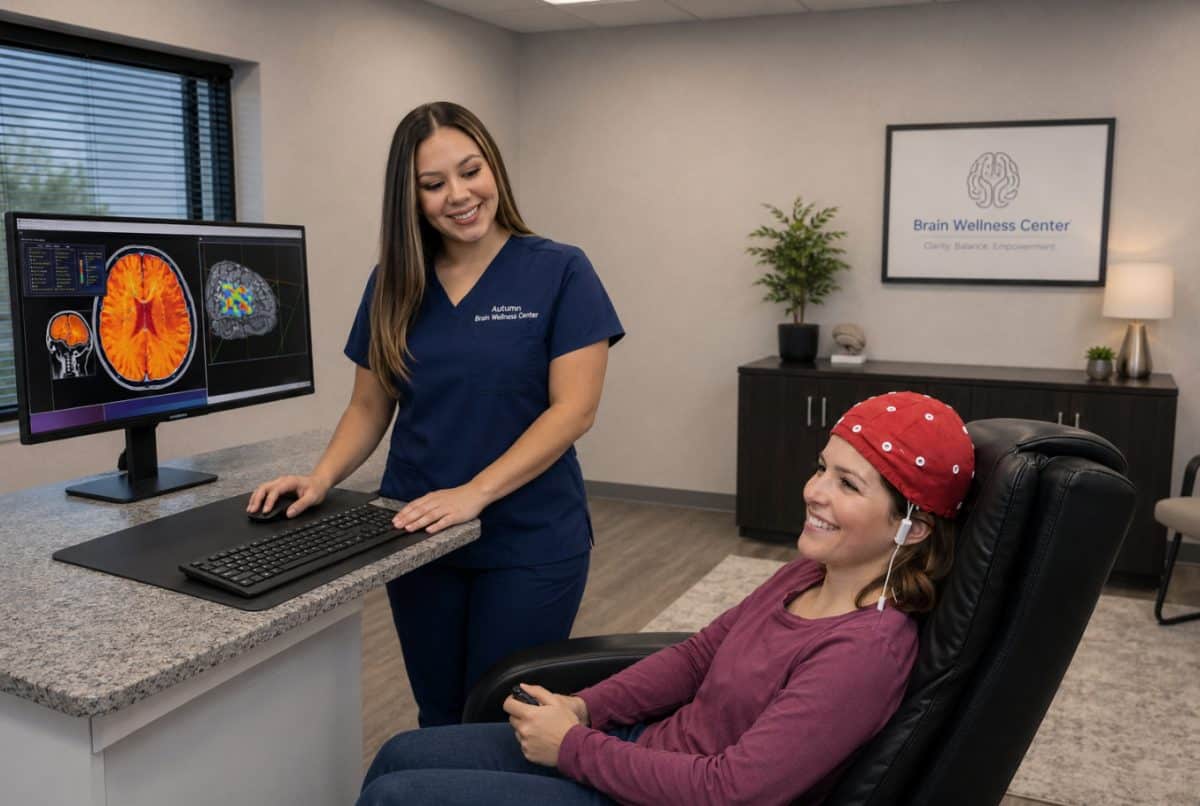
Functional qEEG Brain Mapping provides objective information about brain electrical activity and functional networks. At Brain Wellness Center, it is used to personalize treatment planning and guide qpTMS™ targeting without requiring an expensive MRI.
How much does Accelerated TMS cost?
At Brain Wellness Center the complete Accelerated qpTMS™ course is $14,995. That covers all 50 treatments, functional qEEG Brain Mapping and a cognitive assessment before you begin, and both repeated at the end of treatment so your progress is measured objectively. It also includes treatment planning and physician oversight. There are no extras and no surprises.
Why choose Brain Wellness Center in San Ramon?
Brain Wellness Center combines over 35 years of neuromodulation experience with Functional qEEG Brain Mapping, personalized qpTMS™, advanced treatment protocols, and a multidisciplinary team dedicated exclusively to brain-based therapies.